
Intro
I collaborated with a fantastic group of very talented individuals on a tailor-made car configurator, V2. The first version was based on Unreal Engine 4.x. This version, however, uses Unreal Engine 5.
Why am I excited? Real-time GI and Lumen reflections. These are absolute must-haves for any automotive-related visualizations. Specifically, the ability to have multiple secondary bounces, which result in truer reflections, is fundamental. Here’s why:
Global Illumination (GI) is a system that models how light is bounced off surfaces onto other surfaces (indirect light) rather than being limited to just the light that hits a surface directly from a light source (direct light).
While GI can be pre-computed and inserted onto geometry (as in Baked Lighting), the problem arises due to the nature of the products (automotive/reflective). How GI mixes with reflections and produces shadows is an important part of the process. In a car configurator product, one must offer the ability to rotate the 3D product, possibly in a web browser via pixel streaming. This operation will require lighting recalculation (light bounces differently from different camera angles).
Lumen offers quite exquisite reflection calculations for glossy shaders. That’s fundamental when paired with the Post Process volume settings (Camera or Level), which allows Lumen to use several secondary reflective bounces. Of course, these numbers can be very high, but one thing one must do is search for those sweet spots where visual quality just slightly begins to degrade versus performance.
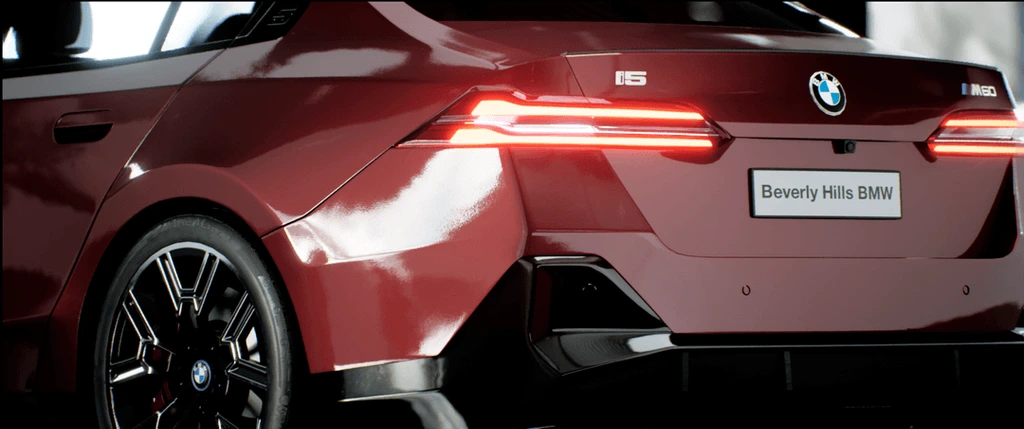
Although Unreal’s rendering capabilities are astonishing, it must be said that most of the TV ads one might see are produced differently, by using ray tracing. This approach brings the whole thing outside the realm of real-time applications, yet it’s fast enough on modern hardware to have almost real-time performance. So don’t be fooled by what Lumen’s GI ray tracing is and what render ray tracing is. One is a model, and the other is a rendering method.
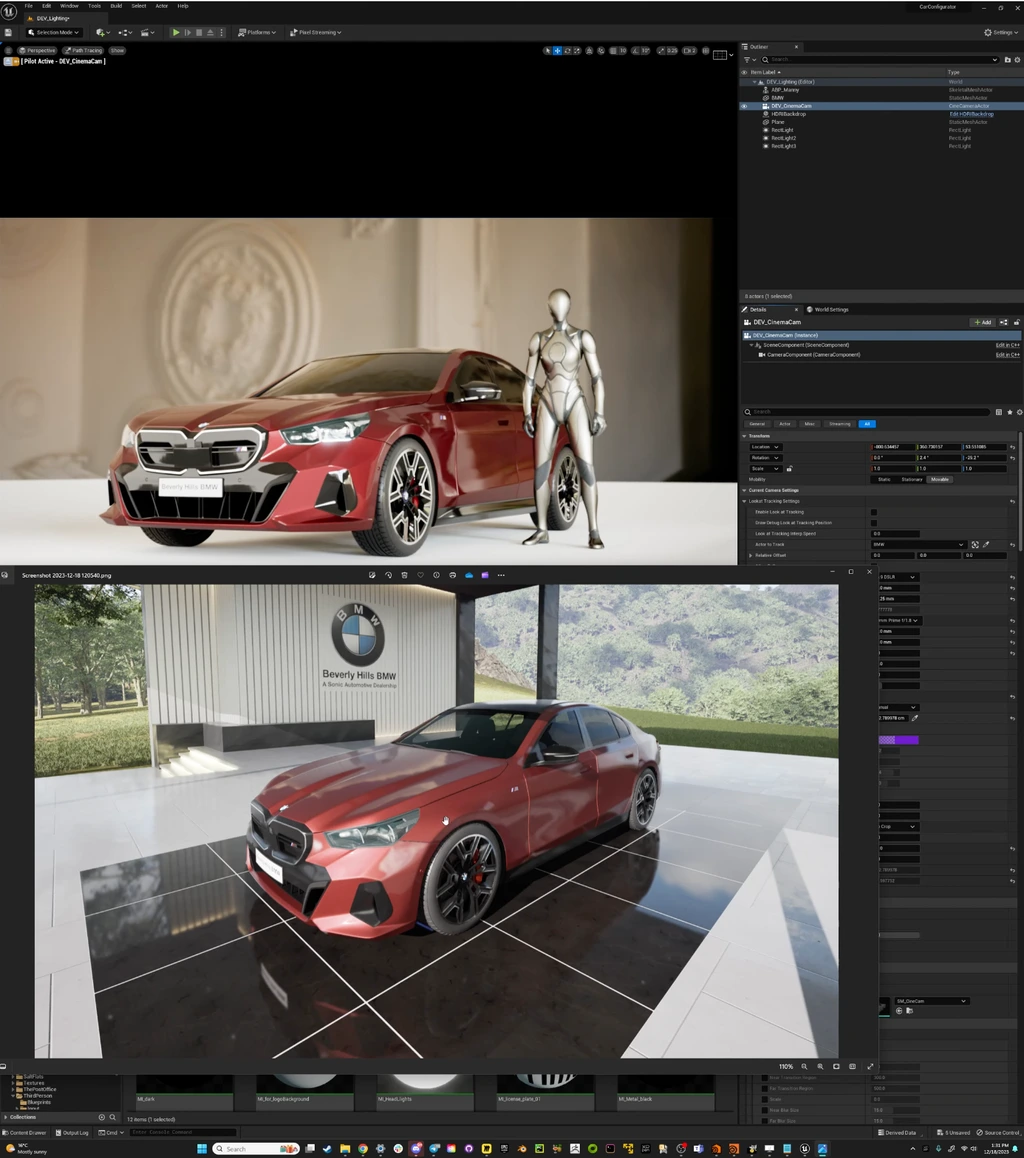
Even more important than light. The post process
I frequently ask myself very, very, very, very weird questions. Here are some examples:
- How do we measure our eyesight in monitor resolution?
- How come we are able to see lights glow?
- Where is the damn dog? (Usually 2 feet away from me)
Let’s skip the first question and the dog. Glowing is not just glowing; technically speaking, it’s incandescence. Incandescence, in short, is the emission of electromagnetic radiation from a hot body. Rendering incandescence is the process of thermal radiation. The best and coincidentally the biggest example is right here. Well, not here. Look up at the big bright ball in the sky. Yep, that’s incandescence in action, at least part-time.
So, to recap the above paragraph, we can note three things:
Electromagnetic radiation Thermal radiation The sun I am not an expert, but I am pretty sure that radiation is not something that happens while you peel a banana. Seeing the sun glow is understandable because we all know the sun is very hot. But I cannot help but wonder, why on earth do car lights glow?

Well, they don’t. They really do not glow. Not a single one of them. They look like they glow, but that is a cinematic trick.
You can easily reenact this trick by turning on your phone’s camera and pointing it at a bright light source (hint: the moon). Now smudge the phone lens with your finger and observe the effect. Or you can observe the experiment performed by me below.

One can also smudge the eyelids and, for a brief moment, get the same effect. Funny!
#Welcome to the power of Inception Post-processing is important because it simulates the effects of light passing through the lens (camera or eyes). Below is the power of post-processing in action, producing what is known in the industry as the Cinematic Look.
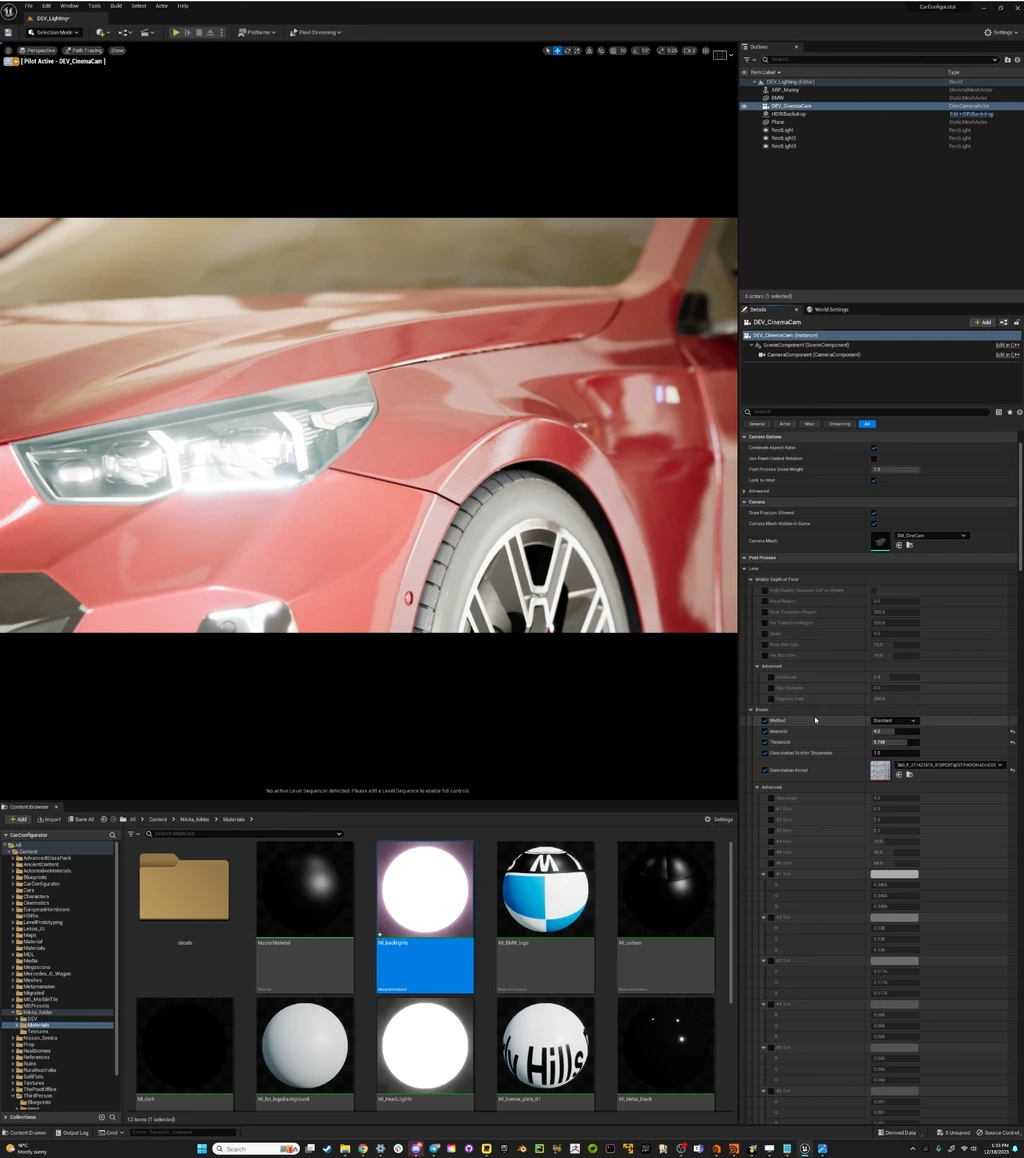
Blending everything together
By cleverly using light, shadows, and post-processing, one can obtain truly cinematic and eye-pleasing effects that will aid the main transaction of this process: to affect a potential customer on an emotional level so that the purchase of the product is made.